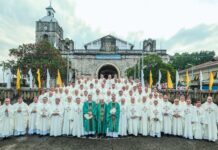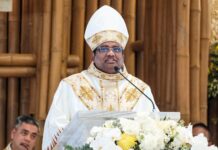

KALIBO, Aklan— Kalibo’s new bishop has backed Boracay’s indigenous Ati community as contested agricultural land they rely on faces pressure for tourism development.
Bishop Cyril Villareal said the Church must defend what is right as Ati families face uncertainty over land they depend on for survival.
“The Church is where justice and what is right are upheld,” said Villareal, who just assumed his episcopal ministry on March 23.
He added, “These things happen because of people’s greed, which seeks profit over what is just.”
The dispute centers on about 3.1 hectares of land on Boracay Island that former President Rodrigo Duterte awarded in 2018 to at least 45 Ati families through Certificates of Land Ownership Award under the agrarian reform program.
The land, divided into five lots, had been recognized as part of efforts to formalize long-standing ancestral claims on the resort island.
Ati families developed the property into farmland, planting fruits and vegetables and raising livestock to support their livelihood.
However, in 2024 the Department of Agrarian Reform revoked the titles after soil tests declared the land unsuitable for agriculture, a finding the Ati community strongly disputes.
Community members said the land remains fertile and productive, sustaining crops and income despite the cancellation of ownership documents.
“This is their land, yet in the end, they were the ones displaced on their own land,” Villareal said.
The Boracay Ati Tribal Organization has appealed to President Ferdinand Marcos Jr. to review the revocation of the land titles, calling for government intervention.
“We hope the President will notice, see, and read our letter, and that he will also help,” Jocelyn Evangelio, a community representative, told Radio Veritas.
Livelihood coordinator Maria Tamboon rejected claims that the land is unsuitable, citing ongoing cultivation including dragon fruit plantations.
“They cannot say the land is unsuitable because it is truly productive and good for cultivation,” Tamboon said.
She urged Marcos to visit Boracay to witness the situation firsthand and better understand the community’s continuing struggle.
“We hope you can come here to see what has truly happened to us in Boracay,” Tamboon said.