DSWD Receives Huge Rice Donation From South Korea Amid Relief Operations
SOUTH KOREA – Thousands of disaster-affected families may benefit from a major rice donation as South Korea turns over 400 metric tons of rice to the DSWD.
The Department of Social Welfare and Development (DSWD) received 400 metric tons of rice from South Korea on Friday, August 14, providing an additional supply that will support the government’s continuing relief operations for communities affected by disasters.
In a statement released Saturday, August 15, the DSWD said the donated rice would be used in the production of family food packs (FFPs). These food packs are distributed to families affected by typhoons, monsoon rains, and other calamities across the country.
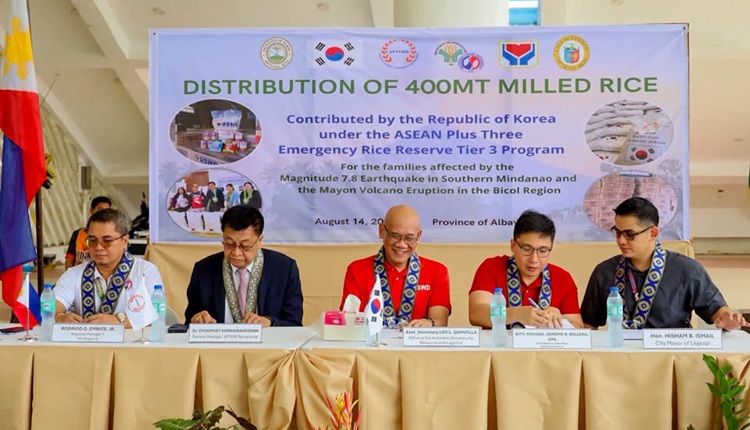
The agency also emphasized that the donation will help ensure adequate rice supplies in disaster hubs nationwide. With sufficient stocks available, the DSWD can maintain the continuous production of relief supplies and respond more efficiently to communities requiring assistance during emergencies.
The latest donation comes as the agency continues to provide aid to thousands of families affected by the southwest monsoon, locally known as Habagat, as well as Typhoons Luis and Maymay.
According to a separate DSWD update as of 6:00 p.m. on Friday, the agency had already distributed 812,925 family food packs to affected communities. The relief assistance also included 16,869 ready-to-eat-food (RTEF) boxes and 9,999 non-food items (NFIs).
The distribution was carried out as part of augmentation requests submitted by local government units (LGUs) seeking additional assistance for families affected by the recent weather disturbances and disasters.
The DSWD said the assistance covered the following areas:
- National Capital Region (NCR)
- Cordillera Administrative Region (CAR)
- Ilocos Region
- Cagayan Valley
- Central Luzon
- CALABARZON
- MIMAROPA
- Bicol Region
- Western Visayas
- Zamboanga Peninsula

The rice donation from South Korea is expected to strengthen the DSWD’s preparedness and response capacity, particularly as disaster hubs continue to replenish relief stocks. By maintaining sufficient supplies, the agency can provide timely assistance to affected families while supporting LGUs during disaster response operations.
The additional rice also highlights the importance of international cooperation in disaster relief. For communities facing the aftermath of typhoons and other calamities, continued support and adequate relief resources remain essential in meeting immediate food and basic needs.
READ ALSO: South Korean Tycoon Ordered to Pay Ex-Wife Nearly ₱40 Billion in Divorce Case