Philippines, Japan Sign Pact to Build Country’s First Government Oil Stockpile as Tokyo Offers Spare Storage Tanks
PHILIPPINES-JAPAN OIL RESERVE PACT – The Philippines has signed a memorandum of cooperation with Japan to develop the country’s strategic petroleum reserves, while Tokyo offered its unused oil storage tanks for a Philippine-led regional stockpiling plan.
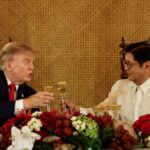
Energy Secretary Sharon Garin and Japanese Minister of Economy, Trade and Industry Ryosei Akazawa signed the agreement on the sidelines of the 49th ASEAN Summit in Manila, the Department of Energy (DOE) announced on Tuesday, November 17, according to BusinessWorld. The pact sets up a framework for building, managing and releasing emergency oil stocks based on the country’s fuel needs, market conditions and emergency response requirements.

“The Philippines must be prepared for disruptions in global oil supply. Developing our strategic petroleum reserves is an important step toward ensuring that we have the systems, infrastructure, and institutional capacity to protect our country’s fuel requirements during emergencies,” Garin said in a statement quoted by The Manila Times.
What the Philippines-Japan Oil Reserve Pact Covers
Based on the DOE’s statement, here are the main parts of the agreement:
- Oil storage infrastructure – Both countries will explore building storage facilities, including possible participation of Japanese companies in commercial stockpiling projects led by the state-run Philippine National Oil Company (PNOC).
- Strategic reserve facilities – Facilities will be developed based on ongoing feasibility studies and possible financing arrangements.
- Technical help – The Japan Organization for Metals and Energy Security (JOGMEC), the Japan International Cooperation Agency (JICA) and the Economic Research Institute for ASEAN and East Asia (ERIA) will support capacity building, oil security assessments and policy development.
- Regional roadmap – The deal also advances talks under Japan’s Partnership on Wide Energy and Resources Resilience Asia (POWERR Asia), including voluntary cooperation with oil-producing countries.
- Duration – The cooperation runs for three years once both countries complete their domestic procedures and exchange notes through diplomatic channels.
“Once we complete the first phase of the project, it will mark the first time in history that the government itself will have a storage facility to reserve or stockpile oil, whether diesel, crude oil, or gas,” Garin said, as reported by BusinessWorld.
Japan Offers Idle Oil Tanks, Proposes Asia Oil Security Task Force
Separately, Japanese Prime Minister Sanae Takaichi offered Japan’s spare oil storage capacity for the Philippine-led regional stockpiling scheme during the Asia Zero Emission Community (AZEC) leaders’ meeting in Manila on Tuesday, The Philippine Star reported.
Under the proposal, participating Asian countries could keep crude oil they buy from the Middle East or other suppliers in unused Japanese facilities and draw from it during emergencies. Takaichi also proposed an Asia Oil Security Task Force, described as an Asian version of the International Energy Agency, to coordinate oil procurement, stockpiling and emergency releases, with a coordination hub in Tokyo.
However, radar.ph noted that the participating countries, oil volumes, financing and the rules for releasing supplies have yet to be finalized. Garin also said she still has to check what stage the discussions are in, since the final decision rests with the leaders.
Why This Matters for Filipino Motorists and Consumers
The Philippines sources about 98% of its crude oil from the Middle East, which leaves local pump prices exposed to supply disruptions such as the conflict affecting shipments through the Strait of Hormuz. As of November 6, the country’s fuel inventory was equivalent to an average of 50.33 days of consumption, based on DOE data cited by The Philippine Star.
A government oil stockpile gives authorities extra supply to release when imports are disrupted. Still, emergency reserves are mainly meant to secure fuel availability and do not guarantee cheaper gasoline or diesel. Their effect on prices will depend on how much oil the country can store and how fast it can be released.
Aside from Japan, BusinessWorld reported that the United Arab Emirates, Saudi Arabia, Thailand and Indonesia have also expressed interest in supporting the country’s oil stockpiling efforts.
Do you think a government oil reserve will help protect Filipinos from sudden fuel price spikes? Have you heard about the 114 gas stations flagged by the DOE for not applying the full rollback?