
Judiciary Budget 2027 — P84.13-B Plan Funds Online Free Legal Aid, Faster Court Cases
JUDICIARY BUDGET – If you cannot afford a lawyer, the Supreme Court is preparing to make one easier to reach online, as the judiciary’s proposed PHP84.13-billion budget for 2027 cleared Senate plenary deliberations on Friday, Nov. 27, the Philippine News Agency reported.
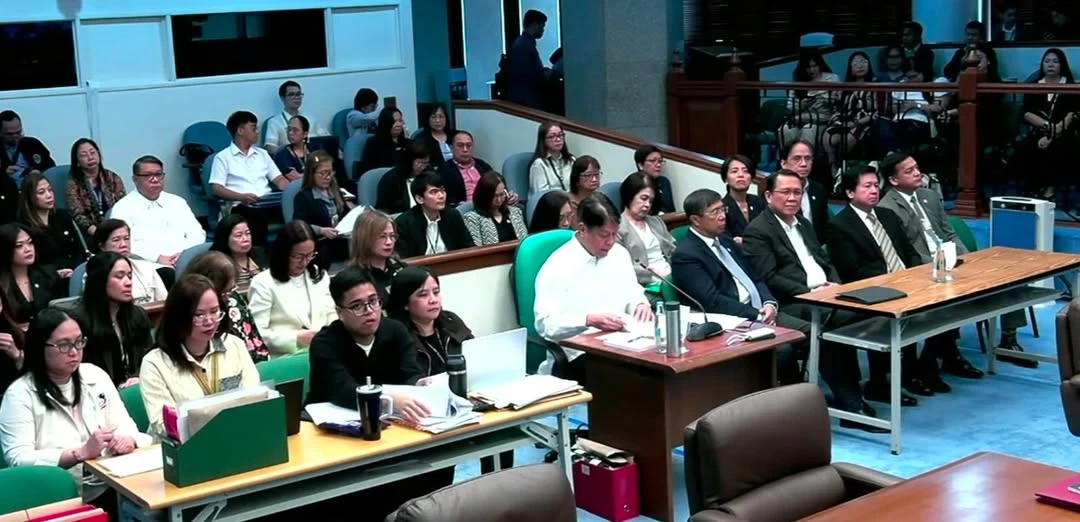
Photo: Screengrab from Senate livestream / PNA
How Much Is The Judiciary’s 2027 Budget?
The proposed PHP84.13 billion is the judiciary’s first budget under Republic Act 12233, or the Judiciary Fiscal Autonomy Act, and the first presented under Chief Justice Rodil Zalameda. The law strengthens the judiciary’s financial independence by providing mechanisms for the release and management of its appropriations.
The bulk of the amount, PHP71.702 billion, goes to the Supreme Court and lower courts. The Court of Appeals gets PHP7.414 billion, the Sandiganbayan PHP3.517 billion, the Court of Tax Appeals PHP1.320 billion, and the Presidential Electoral Tribunal PHP179.788 million.
Senator Francis “Kiko” Pangilinan sponsored the allocation. No senator sought to interpellate, so the chamber closed deliberations on the proposed judiciary budget and deemed it submitted for consideration without objection.
What Changes For People Who Need Legal Help?
Two items lead the list: the full operation of the Unified Legal Aid Service (ULAS) Portal and the establishment of a legal aid referral system that connects indigent litigants with lawyers.
“Para sa 2027, prayoridad ang buong pagpapatakbo ng ULAS Portal at pagtatatag ng legal aid referral system upang mas madaling makakuha ng tulong mula sa mga abogado,” Pangilinan said. In English: for 2027, the priorities are the full operation of the ULAS Portal and the creation of a legal aid referral system so that help from lawyers is easier to obtain.
The judiciary is also pursuing the e-Court PH initiative under its Strategic Plan for Judicial Innovations, which covers online filing of documents, case monitoring and digital management of court records.
How Many Cases Are Still Stuck In Court?
Judiciary data showed that 98,633 cases had been pending for at least five years in first- and second-level courts as of Aug. 31, 2026. Of these, 49,475 had remained unresolved for 10 years or longer.
To speed up proceedings, the judiciary issued revised guidelines requiring trials in criminal cases covered by the regular rules to be completed within 180 days from the first trial date.
What Else Does The Budget Fund?
Pangilinan also expressed support for strengthening the Judicial Integrity Office, which submitted 378 investigation reports to the Supreme Court from January to August this year. Funds would likewise enhance the Office of the Judiciary Marshals, which protects about 30,000 justices, judges and court personnel nationwide.
The judiciary also identified the need for 224 additional halls of justice to improve court facilities.
“Pondohan natin nang buo ang budget na ito. Igalang natin ang fiscal autonomy ng hudikatura,” Pangilinan said — let us fully fund this budget and respect the fiscal autonomy of the judiciary.
The amount remains a proposal until the 2027 national budget is completed and signed.