Offshore wind port in Camarines Norte: P2.3-billion Pambuhan facility breaks ground in Mercedes
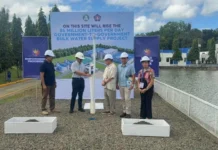
OFFSHORE WIND PORT — The Philippine Ports Authority (PPA) broke ground on Friday, Nov. 27, for the P2.3-billion Pambuhan Offshore Wind Port in Mercedes, Camarines Norte, a facility expected to serve as a major logistics hub for the country’s emerging offshore wind industry (PNA).
Photo: Philippine Ports Authority (PPA) — groundbreaking of the Pambuhan Offshore Wind Port in Mercedes, Camarines Norte on Nov. 27, 2026

What Will The Pambuhan Port Be Used For?
The port is meant to be a support facility, separate from the offshore wind farms themselves, where turbines are installed at sea to generate electricity.
Once completed, it will provide heavy-lift facilities and marshalling space for the handling, temporary storage, and preparation of oversized turbine components before these are transported to offshore installation sites, the PPA said.
How Big Is The Project And How Much Will It Cost?
The project carries a contract amount of around P2.3 billion and covers Phase 1 of the development.
Phase 1 includes a 2.9-hectare operational, berthing, and staging area, along with a 430.88-linear-meter temporary access road.
Who Led The Groundbreaking?
The ceremony was led by PPA General Manager Jay Santiago, Department of Energy (DOE) Secretary Sharon Garin, and Camarines Norte Governor Ricarte Padilla.
“Philippine ports are evolving beyond their traditional role as gateways for passengers and cargo as we are now building the infrastructure that will support emerging industries, including offshore wind, and help unlock new opportunities for the country,” Santiago said.
Why Does The Port Matter For Renewable Energy?
The initiative supports the Philippine Energy Plan 2023–2050, which targets a renewable energy share of 35 percent in the power generation mix by 2030 and 50 percent by 2040.
Offshore wind projects need a nearby base with heavy-lift equipment and open ground for staging, because turbine parts are too large and too heavy for ordinary cargo handling. A dedicated port keeps those components out of busy commercial terminals and shortens the trip to the installation sites at sea.
What Does It Mean For Mercedes And The Bicol Region?
The development is expected to generate economic opportunities and employment for residents in Mercedes and neighboring communities in the Bicol Region.
For now, the groundbreaking covers the first phase of a facility that the PPA is positioning as part of the country’s wider push to build up renewable energy, alongside the targets set in the Philippine Energy Plan.