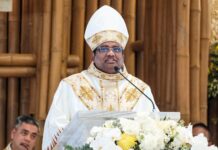

“We are now entering the A.E era.”
Such were the comments of Filipinos following reports of the death of former chief presidential legal counsel Juan Ponce Enrile.
The centenarian passed away on Thursday, November 13 at his home after battling pneumonia in a hospital’s intensive care unit.
He was 101 years old.
It was on November 11 that Sen. Jinggoy Estrada, Enrile’s co-accused in the pork barrel scam, stated he had a credible source indicating that the former Senate president was in critical condition.
Two days later, Enrile’s daughter confirmed that the storied politician had died.
Reports of his death quickly earned buzz among Filipinos, who have long made comments about his old age and longevity.
“Juan Ponce Enrile is dead (legit this time),” a Pinoy wrote in an online community.
“JUAN PONCE ENRILE DEAD AT 101, REAL NA,” another user said, referencing fake posts that have emerged throughout the years about Enrile dying.
“We’re officially entering the A.E. era,” said a different user. “A.E.” is short for “After Enrile.”
The acronym was inspired by the “BC” and “AD” acronyms used to refer to the eras “Before Christ” and “AD” or “Anno Domini, Latin for “In the year of the Lord.”
“Before Christ” refers to the period before the estimated birth of Jesus Christ.
“End of an era,” commented another Pinoy.
“Mga dates dati: B.C., A.D. Starting tomorrow, A.E.,” wrote a different user.
“If you’re reading this, congratulations. You have outlived Juan Ponce Enrile,” said another Filipino.
“Juan Ponce Enrile dies at 101, days after acquittal in PDAF case. RIP,” commented a different user.
Some inventions and discoveries that are younger than Enrile, according to a science organization, include television (invented in 1927), bubble gum (invented in 1928), FM radio (invented in 1933), ballpoint pen (invented in 1938), polio vaccine (invented in 1952), and instant noodles (invented in 1958).
Enrile in Philippine history
Enrile, born on Valentine’s Day in 1924, during the American Colonial Period, had seen more than a hundred years of the country’s history.
He was alive to see nearly all of the presidencies to have ever existed since the Philippines’ independence.
ALSO READ: Juan Ponce Enrile, symbol of enduring power in Philippine politics, dies at 101
Enrile first started working for a Marcos when he was taken under the wing of then-senator Ferdinand Marcos Sr.
Eventually, Enrile held several key government positions, including Bureau of Customs chief and as the secretary of national defense. He had been one of the would-be dictator’s most trusted men.
In 1972, Enrile, still the defense minister, was ambushed. This became one of the pretexts for Martial Law, among the darkest periods in Philippine contemporary history, which cracked down on activists, curtailed media freedom, and plunged the country into massive debt.
However, it is widely believed that Enrile’s ambush was staged.
Decades into Marcos Sr’s term, Enrile himself would become a key figure in ending the dictatorship and ousting him.
While Enrile would serve as a defense minister under the late president Corazon Aquino, he would eventually shift to Congress. There, power again seemed to be drawn to him, as he served two terms as the Senate president.
During his term as a senator, Enrile was implicated in two different corruption controversies.
One of them was the decade-defying pork barrel scam, where the Priority Development Assistance Funds were allegedly channeled through ghost organizations and into the pockets of legislators.
Despite Enrile’s role in helping oust his father, incumbent President Ferdinand Marcos Jr. appointed the former as the chief presidential legal counsel in 2022.
During his stay in Marcos Jr’s Cabinet, Enrile’s corruption case was dismissed. — with reports from Philstar.com/Jean Mangaluz