
Calls for the government to refrain from postponing the Barangay and Sangguniang Kabataan Elections (BSKE) scheduled for November have surfaced online following proposals to delay the polls.
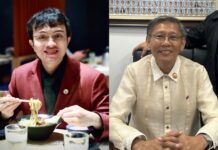
Nestie Villaviray, founder of the Model Sangguniang Kabataan Network, on Monday, August 3 expressed his disagreement with proposals to postpone the BSKE, a topic that was not mentioned in the penultimate State of the Nation Address (SONA).
Last year, President Ferdinand Marcos Jr. signed a law postponing the BSKE, which was originally scheduled for December 2025. It was moved to the first Monday of November 2026.
Rep. Niko Raul Daza (Norther Samar, First District) has filed a House bill seeking to postpone the BSKE again and reschedule it to November 2028, citing the need to conserve government funds amid the energy crisis and rising costs of basic commodities.
He said the move would allow the government to prioritize its financial resources as the country continues to grapple with a national energy emergency and the effects of increasing fuel prices, electricity rates, transportation costs, food prices and other essential goods.
Daza said his proposal does not intend to deprive Filipinos of their right to vote, adding that it was made in consideration of the country’s current economic and energy situation.
The bill states that incumbent barangay and SK officials will remain in office until their successors are elected.
Villaviray, meanwhile, opposed the idea, saying it affects youth leaders who already want to end their term due to the “toxicity” of Philippine politics.
“Yakap sa lahat ng mga outgoing SK Chairperson, SK Kagawad, SK Treasurer, at SK Secretary na hinihintay na lamang matapos ang kanilang termino dahil kotang-kota na sa ka-toxican ng pulitika sa kanilang barangay o lokalidad,” he wrote on Facebook.
“Ngayon, nadagdagan pa ang inyong stress at pangamba dahil sa balitang maaari na namang ma-postpone ang BSKE at ma-extend ang inyong panunungkulan. Habang may ilang Barangay at SK officials naman na tuwang-tuwa sa posibilidad na ito,” Villaviray added.
“Mahirap lalo na kung ang tanging hangarin ng kabataan ay maglingkod nang epektibo pero araw-araw na sinusubok ng bulok na sistema. Ang unti-unting paghipan sa natitirang apoy ng dedikasyon at natitirang pag-asa na manatili, lumaban, at iwan ang sistemang mas maayos kaysa sa nadatnan ninyo,” he said.
Villaviray called the move to postpone the BSKE a tactic of those who wanted to protect the “rotten system,” claiming they wanted to “tire out” the youth leaders.
“Sisikapin nilang mapawi ang ideyalismo ng kabataan hanggang sa mawalan na ng gana, sumuko, at tuluyang lumayo sa serbisyo-publiko,” he said.
“At kung muling magtatagumpay ang panukalang postponement, hindi lamang nito pahahabain ang panunungkulan ng mga incompetent, sisirain din nito ang uhaw ng maraming kabataan na handa nang tumakbo at maghatid ng pagbabago,” Villaviray added.
He said the postponement would “kill” the “momentum, drive and the hope” carried by a new generation of youth leaders who are ready to serve.
“Higit kailanman, ngayon kailangang maiparinig ang boses ng kabataan. Huwag tayong pumayag na ang ating kinabukasan ay kontrolin at pagdesisyunan ng mga mambabatas na inuuna ang kanilang pansariling interes. Tutulan natin ang postponement! #NoToBSKEPostponement,” Villaviray concluded.
On Thursday, August 6, the National Citizens’ Movement for Free Elections (NAMFREL) also expressed its firm opposition to the postponement the synchronized BSKE from Nov. 2, 2026 to November 2028.
“We call on the House of Representatives to reject this measure and allow the BSKE to proceed as scheduled,” it said.
The group emphasized that “regular, predictable leadership cycles are the ultimate check and balance in Philippine grassroots governance.”
“Barangay and SK elections have already been the most frequently postponed democratic exercises in the country’s history. Each additional delay normalizes the practice of legislating around the electorate rather than submitting to it, and every postponement makes the next one easier to justify. NAMFREL believes this cycle must stop with the schedule that is already the law of the land,” it said.
“While NAMFREL acknowledges the genuine economic pressures cited by the bill’s proponents — inflation, energy costs, and the need for fiscal discipline — we submit that these realities, weighed against the risks of yet another postponement, make a far more compelling case for proceeding with the BSKE on November 2, 2026 than for delaying it,” NAMFREL added.
“Regular elections are not an administrative convenience the State may suspend when budgets tighten; they are a constitutional guarantee that voters owe to no one’s discretion but their own,” it concluded.
Last month, the Commission on Elections (Comelec) said it would ask Marcos to declare Nov. 3, 2026, a holiday in connection with the BSKE to be held on November 2.
The poll body said the declaration would benefit voters, especially those who need to travel their home provinces to be cast their ballots on election day.
“The Comelec will request the president to consider declaring November 3 a holiday. Since November 1 is All Saints’ Day, many of our fellow citizens will be traveling to their hometowns,” Comelec Chair George Garcia said in July.
“However, if there is work or school on November 3, they might rush back from the provinces on November 2 and fail to vote at their polling precincts,” he added.
Garcia said declaring November 3 a holiday would give Filipinos an extra day and allow them to avoid rushing back to work.
The BSKE will allow regular voters aged 18 and above to elect a new set of barangay officials in their communities, including a barangay chairperson and councilors.
Meanwhile, voters aged 15-17 will elect a new set of SK officials including an SK chairperson and councilors.