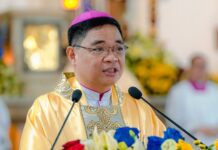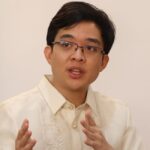

Many victims of killings in the Duterte administration’s “war on drugs” were falsely linked to illegal narcotics, according to the Catholic bishop whose Kalookan diocese became known as “ground zero” of the crackdown.
Cardinal Pablo Virgilio David made the claim Friday as the Truth Commission held its first public truth-telling session on killings linked to former President Rodrigo Duterte’s anti-narcotics campaign.
David said many people were placed on drug watch lists despite having no involvement in illegal drugs, exposing them to violence.
Without citing figures, he said “more than half” of the families his diocese encountered who had lost a relative had nothing to do with drugs.
“That’s where the violation of human rights begins,” David said, adding that people could suddenly find their names on watch lists and become targets of police or vigilante-style operations.
He said some people even pleaded guilty to drug offenses they did not commit because they feared being killed.
‘Please don’t remove us’
The Kalookan diocese ran a community-based rehabilitation program with the psychology departments of Ateneo de Manila University and De La Salle University.
The program accepted people ordered by courts to undergo rehabilitation after pleading guilty to drug-use charges through plea-bargaining arrangements.
David said he was shocked to discover that more than half of those entering the program were not drug users. Some participants pleaded to stay on the list, fearing removal would expose them to killings.
“Please don’t remove us from your list,” David recalled them saying. “It is better that you rehabilitate us, even if we are not drug users.”
David said the diocese sometimes issued rehabilitation certificates to people who did not need treatment so courts could grant them release. He compared the effort to “Schindler’s List,” the 1993 film depicting the rescue of Jews during Nazi persecution.
“Even if we could save only a few lives, that was already enough for us,” David said.
‘I cannot rehabilitate dead people’
David said the experience changed his understanding of the government’s anti-drug campaign, which he now calls the “so-called war against illegal drugs.”
He admitted he initially gave the government the benefit of the doubt because illegal drugs were a genuine problem in communities.
That changed as bodies were repeatedly found on the streets of Caloocan, Malabon and Navotas, which are covered by his diocese.
“I could no longer sleep or remain at peace as a pastor,” David said, recalling the killings during the Duterte administration.
David said he had offered to help the government rehabilitate people with substance-use disorders rather than support policies that could lead to their deaths.
“I cannot rehabilitate dead people,” he said, describing the message he repeatedly delivered to government officials.
First public truth-telling session
The Truth Commission, formally launched in May, is an independent, civilian-led body created by church leaders, human rights advocates and legal experts.
It seeks to document alleged extrajudicial killings and other human rights abuses linked to the government’s anti-drug campaign.
The commission has no power to subpoena witnesses or prosecute anyone, David said, stressing that its primary purpose is to establish and document the truth.
Friday’s session at the Pope Pius XII Catholic Center in Manila featured Luzviminda Siapo, whose 19-year-old son, Raymart Siapo, was killed in Navotas in March 2017.
According to the commission, armed and masked men abducted Raymart hours after a neighbor reported him over a dispute involving an allegation of marijuana peddling.
Witnesses said the attackers ordered Raymart to run, although he had a congenital foot condition that made running difficult. The commission said he was instead forced to sit down before being shot twice in the head at close range.
David said Raymart’s death became a turning point that pushed him to document killings affecting communities under his pastoral care.
‘We are not starting from zero’
David said the commission is building on documentation already collected by church groups, human rights advocates and organizations assisting victims’ families.
“We are not starting from zero,” he said, adding that the first public sessions will present different categories of people affected by the killings.
He acknowledged that his diocese has reached fewer than 15% of people who may have suffered trauma from killings linked to the campaign.
Many survivors have moved away, changed phone numbers or deliberately cut contact because they want to forget the violence, he said.
David urged survivors willing to share their experiences to come forward before the commission and the wider public.