Road Blockade During Quiboloy Manhunt Leads To Jail Time For Rally Organizer
QUIBOLOY – A dramatic standoff tied to the arrest of Apollo Quiboloy has now led to a jail sentence for one of its organizers.
A Quezon City court has handed down a four-month jail sentence to a member of the Kingdom of Jesus Christ (KOJC) for his role in organizing a road blockade that disrupted a police manhunt for religious leader Apollo Quiboloy in August 2024.
In a decision issued on April 26, Judge Juvenal Bella of the Quezon City Metropolitan Trial Court Branch 39 found Eduardo Corda guilty of violating the Public Assembly Act of 1985. The case stemmed from protests mounted by KOJC members in Davao City, where supporters attempted to shield Quiboloy from arrest by obstructing access to the group’s compound.
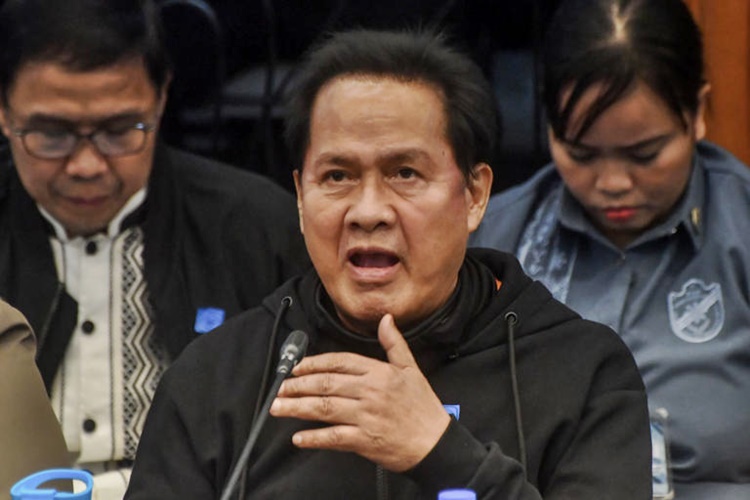
The ruling was later shared on social media by former Philippine National Police chief and current Metropolitan Manila Development Authority general manager Nicolas Torre, who had served as ground commander during the operation. Torre clarified that his intention in posting the decision was “not as a celebration (or for) revenge,” but as a reminder that “the law is the law.”
“There were people who chose to violate the law by barricading and blocking the road and used chaos as a weapon during the implementation of the arrest warrant against Quiboloy,” Torre said. “Now, the court has made its decision,” he added. “If ordinary citizens are required to obey the law, even more so for those in power.”
The incident traces back to a 16-day standoff at the KOJC compound, which eventually led to Quiboloy’s arrest. The Davao-based pastor, known for his close ties to former President Rodrigo Duterte, is facing charges in Pasig and Quezon City courts, including sexual abuse and qualified human trafficking. He is currently being held at the Pasig City Jail.
According to the court, KOJC members had obtained a permit for a “prayer rally,” but it only authorized activities within the compound. Protesters went beyond these limits by occupying sections of the Philippine-Japan Friendship Highway, causing major disruption by using vehicles and heavy equipment to block the road.
“By barricading a national thoroughfare with heavy equipment, the participants exceeded the spatial authority granted. In this regard, a permit is not a license to occupy any public space at will; it is limited by the conditions and locations specified therein,” the court stated.
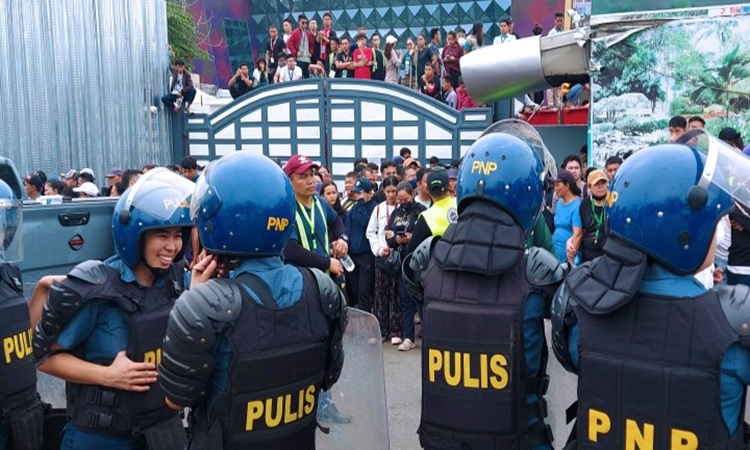
Although Corda argued that he merely acted in a peacekeeping capacity, witnesses and police accounts identified him as a leader who used a megaphone to direct the crowd.
The court emphasized that while freedom of assembly is protected, it is not without limits. “When the exercise of free expression transcends the bounds of its legal authorization and encroaches upon the fundamental right of the public to safe and unobstructed passage, the law provides for a necessary reckoning,” it said, adding that the case highlights the balance between individual rights and public safety.
READ ALSO: Judge Says No: Quiboloy Must Stay in Jail Despite Health Concerns