The House OKs the bill authorizing President Bongbong Marcos to do this.
A total of 247 lawmakers voted in favor of the bill allowing President Bongbong Marcos to reduce or suspend excise tax on fuel products.
An excise tax is a type of tax imposed on specific goods or services at the time they are purchased. Unlike international taxes, excise taxes are collected within the jurisdiction of a particular government.
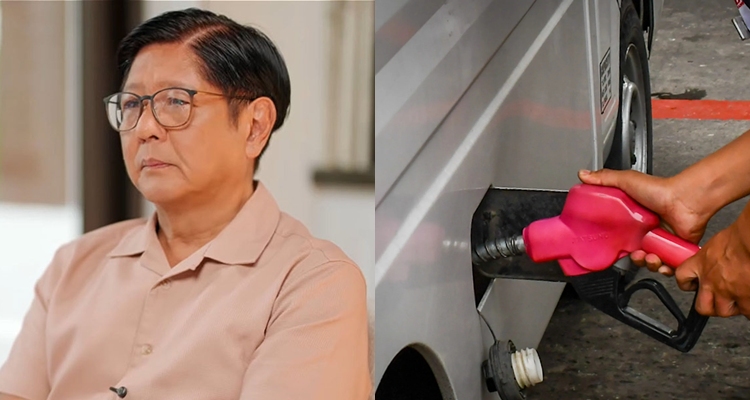
Due to the ongoing conflict in the Middle East involving Iran, Israel, and the United States, global oil prices have continued to rise rapidly. This situation has also affected the Philippines, where increasing fuel prices have become a major concern for many Filipinos.
As oil costs climb, daily expenses such as transportation and basic goods also become more expensive, making it harder for families to manage their everyday needs.
Recently, to lessen the burden on the people, lawmakers passed the bill giving President Bongbong Marcos the authority to act immediately during this time of economic distress. This measure is proposed to cushion the impact of the surging fuel costs that directly affect transport workers, farmers, and businesses, which rely on petroleum products.
During the plenary session on Monday, 247 lawmakers voted in favor of House Bill (HB) No. 8418, while three lawmakers voted against it, and none abstained.
Under the proposal, Marcos Jr. may suspend or reduce the excise tax imposed on petroleum products when the barrel price of Dubai Crude rises to $80, or when oil prices “increase extraordinarily” during a state of national emergency or calamity in the Philippines.
Congress holds the exclusive power to impose taxes, which is why it must pass a law granting the president authority to adjust excise taxes.
As we all know, oil prices in the Philippines rose by double digits, with the Department of Energy saying it was the largest jump in history.
If enacted into law, Marcos Jr. may fully suspend the fixed excise taxes on petroleum products imposed under the Tax Reform for Acceleration and Inclusion Law. There would be a significant decrease of about ₱5 per liter for kerosene, ₱6 per liter for diesel, and ₱10 per liter for gasoline.
However, the proposal still needs approval from the Senate of the Philippines before it can be sent to the president for signing. Once the two chambers of Congress pass the proposal, it will become a law after the president signs it.
What can you say about this? Let us know in the comments!