
Confusion over pay rules arose following Malacañang’s declaration of the 40th EDSA People Power Revolution anniversary as a “special working holiday.”
The People Power Revolution will be commemorated on Wednesday, February 25, a working day for Filipinos.
The occasion marks the heralding of “an era of peace” in the country after totalitarian rule by Ferdinand Marcos Sr., who placed the country under Martial Law for almost a decade in the ’70s.
The particular date, February 25, 1986, also saw the inauguration of late president Corazon Aquino, wife of assassinated opposition senator and democratic icon Ninoy Aquino.
That evening, the Marcos family and their entourage fled to Hawaii.
Fast forward to 2025, the only son, President Ferdinand Marcos Jr., would declare the date a “special working holiday” through Proclamation No. 1006 (series of 2025).
It is the only occasion marked as such in the country’s list of holidays.
Others are labelled as “regular holidays,” “special non-working days,” and “additional special non-working days.”
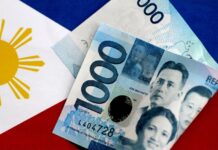
Meanwhile, the declaration of the People Power Revolution anniversary as a “special working holiday” prompted some Filipinos to wonder whether it could mean “double pay” for them since it is a working day.
This caused a Reddit user to clarify the wages workers would receive on February 25.
“I’ve been seeing a lot of misinformation about the pay rules for February 25, 2026, (EDSA People Power). I just want to clarify that it’s a special working holiday, which means it’s treated just like a regular working day when it comes to wages,” the user said in the “r/Philippines” community.
“Employees who report to work on that date are entitled only to their normal daily pay, there’s no additional 30% or 100%,” the Redditor added.
Special Working Holiday Pay
by
u/-shouldbeworking in
Philippines
What DOLE says
The Department of Labor and Employment (DOLE) released an advisory concerning the wages people who report to work would receive.
“It shall be considered as an ordinary working day for the purpose of payment of wages and wage-related benefits,” it said in a Facebook post.
“For work done on ordinary working day, employer shall pay 100% of the employee’s wage for the first eight hours (Basic wage x 100%); and for work done in excess of eight hours, the employer shall pay the employee an additional 25% of the hourly rate on said day (Hour rate of the basic wage x 125%),” DOLE added.
It also said that the “no work, no pay” principle shall apply to those who do not report for work on that day, “unless there is a favorable company policy, practice, or collective bargaining agreement (CBA) granting payment on a special day.”
What about the ‘special working holiday’?
Clarification about misconceptions about a “double pay” triggered reactions from some Filipinos who wondered why the occasion was called a “special” working holiday.
“Pinaganda pa sa tawag na SPECIAL WORKING DAY,” a Facebook user wrote.
“In short, walang pinagkaiba sa regular working day,” another user commented.
“Pinahirapan pa explanation. Hahaha! In short, may pasok,” said a different user.
“Ginandahan pa tawag e,” commented another Pinoy.
“Pinagugulo niyo lang, ‘pag holiday, dapat holiday talaga. Kung ayaw niyo magbayad ng double pay, ‘wag niyo tawaging holiday. Dami niyong alam,” said a different user.
Others said the label was a way of Marcos Jr. “downplaying the spirit of EDSA” by declaring it a working day.
“Wow. People here be like, ‘why call is special, if it’s just a regular day then?’ The real issue here is Marcos downplaying the spirit of EDSA, and showing no remorse whatsoever for all the dread his family brought upon this country,” a Pinoy said.
In 2024, sentiments about Marcos Jr. declaring the EDSA anniversary as a “special working holiday” earned buzz among Filipinos who noticed the shift.
“Papunta na sa not-a-holiday ‘yung People Power Anniversary,” someone said before.
RELATED: ‘Inu-unti unti’: Declaration of EDSA Revolution anniversary as working day questioned
Before Marcos Jr. assumed the presidency, past administrations declared the EDSA Revolution anniversary a special non-working holiday, with classes suspended and most workers excused.
What’s next
Lawmakers in the House of Representatives have filed a bill to declare the occasion a regular holiday, officially recognizing its significance in Philippine history.
“February 25, 1986 is more than a date etched in history — it marks the moment when the Filipino people peacefully rose to reclaim their democracy. It stands as a testament to courage, unity, and the enduring power of collective action,” Rep. Chel Diokno (Akbayan party-list) said in a statement.
“It is our responsibility to honor this defining moment with the full recognition and dignity it deserves as a regular national holiday,” he added.
The inconsistent classification of the People Power Anniversary over the past three years, Diokno said, has only diminished the “historic and civic significance of EDSA.”
The EDSA Revolution was a four-day event that featured a series of public protests and demonstrations culminating in a historic march along Epifanio de los Santos Avenue (EDSA), the main artery of Metro Manila.
The march was a manifestation of people’s sentiments Filipinos’ sentiments against “totalitarian rule,” according to the Official Gazette.
The totalitarian rule refers to Marcos Sr’s dictatorship after placing the country under martial rule from 1972 to 1981.
Human rights organization Amnesty International said the period “saw an unprecedented wave of torture, extrajudicial killings, and other serious human rights violations against peaceful activists and members of the public across the country.”
“From 1972 to 1981, some 70,000 people were imprisoned and 34,000 were tortured; over 3,200 people were killed,” it added.