Malacañang Explains Why Bongbong Marcos Cannot Control Rising Oil Prices
BONGBONG MARCOS – As rising fuel costs continue to put pressure on commuters, businesses, and consumers, the Palace has explained why the Bongbong Marcos administration cannot simply dictate petroleum prices.
Malacañang has maintained that President Ferdinand “Bongbong” Marcos Jr. did not want the continuing increase in fuel prices, as rising crude oil costs begin to affect consumers, businesses, and the broader Philippine economy.
Presidential Communications Office (PCO) Undersecretary and Palace Press Officer Atty. Claire Castro made the statement after being asked about the impact of higher petroleum prices during a press briefing in Batac City, Ilocos Norte, on Friday, September 25.

Castro acknowledged that the government could not deny the continuing increase in crude oil prices and its possible effects on the prices of other goods.
“Hindi natin ito maitatatwa. Hindi natin ‘to mapapasinungalingan na tumataas ang presyo ng krudo—at kaakibat nito may domino effect ito na maaari rin na magdulot ng pagtaas ng ibang mga presyo ng bilihin,” said Usec. Castro during the PCO press briefing on Friday, September 25, in Batac City, Ilocos Norte.
She explained that the situation was not something the Marcos administration wanted, particularly as the country had been showing signs of economic improvement before the Middle East crisis emerged.
“Unang-una, ang pangyayaring ito ay hindi po ginusto ng Pangulo, hindi ginusto ng administrasyon. Gumaganda na sana ang ating ekonomiya pero sa kalagitnaan po, February, ay biglang nagkaroon ng krisis sa Middle East.”
Castro also emphasized that the Philippines remains dependent on crude oil from the Middle East, making global developments a factor that cannot simply be controlled by the president or the administration.
“Ang presyo ng krudo—dahil tayo ay dependent sa krudo na nagmumula sa Middle East—hindi po nakokontrol ng Pangulo. Hindi nakokontrol ng administrasyon. Ang kaya lamang kontrolin ng Pangulo ay kung paano maiibsan ang hirap o ‘yong impact na dulot ng krisis sa Middle East. At kahit gano’n pa man ang nangyari, sinisiguro po ng Pangulo na dapat ang suplay ng fuel sa ating bansa ay hindi mahihinto,” she added.
According to Castro, the administration is focusing on maintaining adequate fuel supplies rather than controlling prices.
“Hindi pag-uusapan ang presyo, ang pag-uusapan dapat ay ang suplay. Dahil kahit mababa ang presyo na maibigay sa atin pero walang suplay, ang mangyayari pa rin sa atin, sa negosyo natin, sa buhay natin, hihinto. Kaya ang sinisiguro ng Pangulo, dapat ang suplay ng fuel, ng krudo ay tuloy-tuloy,” the press officer said.
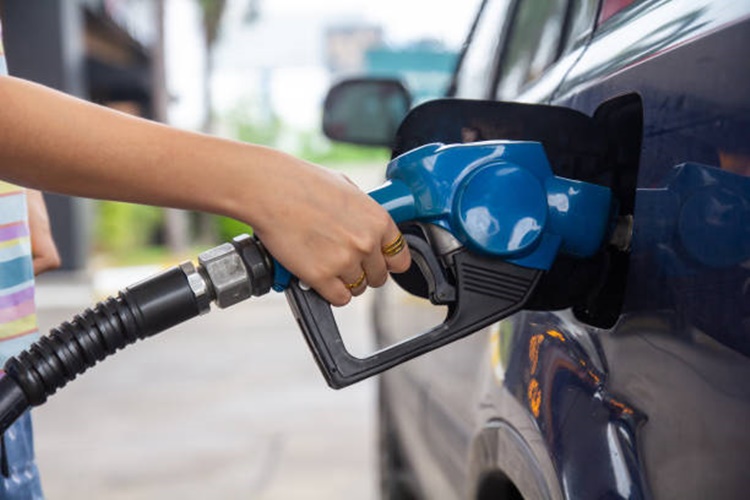
woman refuel car petrol pump filling gas at gas pump.
She added that the country currently has a 54-day fuel supply.
“So, ang sabi nga po ni Secretary Sharon Garin, supposed to be dapat 30 days lang ay maayos na ang suplay. Pero sinisiguro po sa ngayon, 54 days ay mayroon po tayong suplay ng fuel,” she said.
Castro admitted that government assistance has not been perfect but said the transport sector remains a priority. The government has increased fuel subsidies from ₱10 to ₱12 per liter, while other measures include MRT and LRT fare discounts and free tolls for agricultural product deliveries.
“Pero siyempre, marami pa rin pong umaalma dahil naranasan po talaga natin ang krisis. Pero lahat pong ito ay ginagawa ng Pangulo, ginagawa ng pamahalaan para kahit papaano ay makaagapay tayo,” said Castro.
Meanwhile, several transport groups have confirmed plans to hold transport strikes and protests over the continued increase in fuel prices.