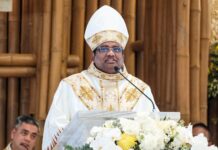

Sen. JV Ejercito, Dela Rosa’s colleague, proposed that the latter voluntarily refrain from accepting his wages and allowances for the meantime amid his continued absence.
“As stated before, even by Senate President Sotto, the Senate has yet to establish rules that can compel attendance. Any formal action will take time, as it must go through amendments and proper deliberation,” he wrote on Facebook on Tuesday, April 21.
“Gaya ng mga ordinaryong Pilipinong ‘no work no pay,’ lalo’t higit ganoon din dapat ang mga lingkod-bayan. Public service is a public trust, we are all accountable to the people we serve,” Ejercito added.
His post has garnered 8,300 likes and reactions, along with 2,300 comments, with some Filipinos asking what steps the Senate can take to address Dela Rosa’s attendance issue.
“Sen, ethics committee ka. I think you have the power to discipline your colleague,” a Facebook user wrote, referring to the Senate committee chaired by Ejercito.
“Mahaba nga po ang proseso sa ethics,” Ejercito responded.
“Gawa kayo, Sen, ng resolution na ‘yung mga laging absent, babawasan ‘yung sahod tapos idagdag sa fuel subsidy ‘yung matitipid galing sa sahod nila,” another commented.
“A Senate resolution cannot accomplish this?” a Pinoy asked.
A resolution in the Senate falls under three types: a simple, a concurrent, and a joint resolution.
A simple resolution is used to express the opinion of a single chamber on a current issue. It may also be used to call for congressional action on matters affecting the national interest.
“Did you [start] establishing the rules as it will take time? Dapat gawin niyo na,” another commented, reacting to Ejercito’s post.
“Senator JV Ejercito, who should be policing Senate in terms of absenteeism, code of conduct, or even leave administration? Sa LGU, may CSC and DILG, how about the senate?” the Facebook user wrote, referring to the Civil Service Commission and Department of Interior and Local Government, respectively.
Dela Rosa logged the highest number of absences during the first regular session of the 20th Congress, with 31 days of non-attendance.
Earlier this month, there were calls for him to be held accountable for his absences, amid concerns that he continues to receive pay as a lawmaker despite not showing up in the Upper Chamber.
RELATED: Mounting calls to hold Bato dela Rosa accountable as he logs most Senate absences
Under the Compensation and Position Classification Act of 1989, senators have a Salary Grade of 31, with a monthly pay ranging from P293,191 to P334,059, in addition to allowances.
Last February, Majority leader and Ilocos Norte Rep. Sandro Marcos filed House Bill No. 7432, which seeks to institutionalize a “no work, no pay” scheme for members of Congress, including senators.
A month earlier, Senate President Tito Sotto said that the office of Dela Rosa remained operational despite his continued absence.
Dela Rosa has not been seen in the Senate since November 2025, after Ombudsman Boying Remulla alleged that the International Criminal Court had issued an arrest warrant against him.
The ICC Office of the Prosecutor later identified the senator as one of former president Rodrigo Duterte‘s co-perpetrators in alleged crimes against humanity of murder and attempted murder.